

.svg)


.svg)
.png)


DAILY DEALS
Friendly budtenders
HUGE SELECTION
TOP BRANDS
DAILY DEALS
50% Off FUN FRIDAYS
THC-INFUSED BEATS
100% VIBE-TESTED
THC-INFUSED BEATS
100% VIBE-TESTED
THC-INFUSED BEATS
100% VIBE-TESTED
THC-INFUSED BEATS
100% VIBE-TESTED
THC-INFUSED BEATS
100% VIBE-TESTED
THC-INFUSED BEATS
100% VIBE-TESTED
THC-INFUSED BEATS
100% VIBE-TESTED
DAILY DEALS
Friendly budtenders
HUGE SELECTION
TOP BRANDS
DAILY DEALS
50% Off FUN FRIDAYS
THC-INFUSED BEATS
100% VIBE-TESTED
THC-INFUSED BEATS
100% VIBE-TESTED
THC-INFUSED BEATS
100% VIBE-TESTED
THC-INFUSED BEATS
100% VIBE-TESTED
THC-INFUSED BEATS
100% VIBE-TESTED
THC-INFUSED BEATS
100% VIBE-TESTED
THC-INFUSED BEATS
100% VIBE-TESTED
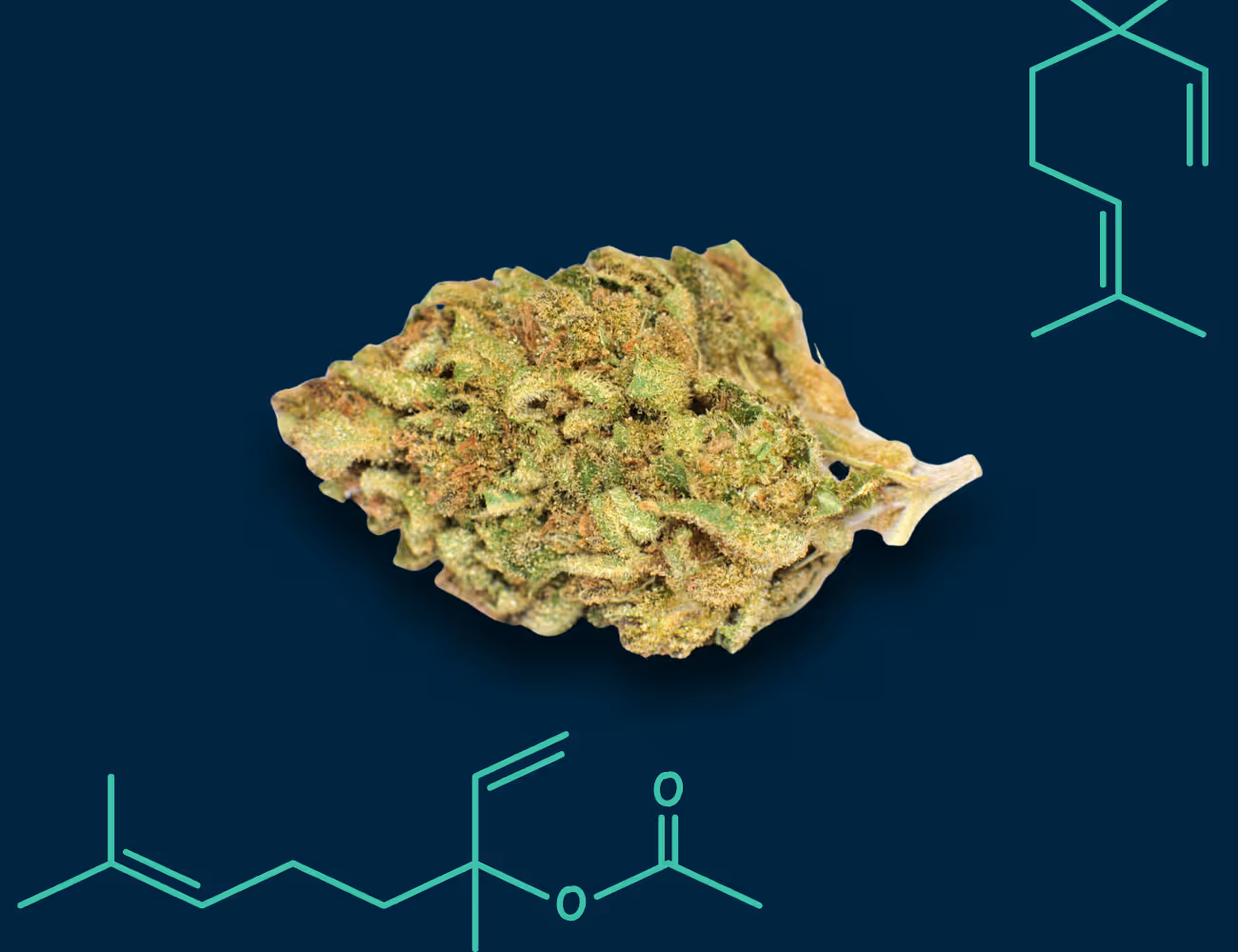
Most people walking into a dispensary like Perfect Union already have a loose plan. Maybe it’s a strain name they recognize, a certain vibe they’re going for, or just a format they prefer: flower, pre-rolls, something simple and familiar. And honestly, that’s usually enough to land on something solid. But what’s not in our minds is everything that happens before that jar ever hits the shelf.
Great flower doesn’t just appear. It gets chosen. Refined. Re-grown. Compared. And narrowed down through a process that’s way more intentional than most people realize.
That process? It’s called pheno hunting. And it’s one of the biggest reasons some flower stands out while others just… blend in.
What Pheno Hunting Really Means
“Pheno hunting” is short for phenotype hunting, but don’t let the name make it sound more complicated than it needs to be.
When growers start from seed, even seeds from the same strain, they don’t get identical plants. Each one comes out a little different. Slight shifts in aroma, flavor, structure, resin production, even how the plant grows and finishes.
Those variations are called phenotypes, or “phenos.”
Pheno hunting is the process of growing a large group of those plants and narrowing them down to the best version. Not randomly. Not based on one standout feature. But through actual side-by-side comparison.
Think of it less like picking a winner at first glance and more like refining something until it consistently hits.
It’s Not One Trail; It’s the Whole Package
Here’s where people often oversimplify things: it’s easy to assume growers are chasing one standout quality. Strong aroma. Eye-catching buds. Something flashy.
But that’s not really the goal.
Pheno hunting is about finding the version of a plant where everything works together, and not just one moment that impresses.
When growers are evaluating phenos, they’re paying attention to how the flower performs across the entire experience:
- Flavor and aroma: Does it hit right away? Does it stay present or disappear halfway through?
- Consistency: Can it be grown again and still deliver the same results?
- How it actually smokes or vapes: Smoothness, flavor retention, overall feel
- Bud structure: Not just looks, but how it breaks down and handles
- Resin production: Those trichomes matter for both flavor and quality
The real question behind all of it is simple: Does this plant feel complete?
Because plenty of plants can shine in one area. Fewer can hold up from start to finish.
That’s the difference you notice when something feels dialed in versus just “pretty good.”
Why the Same Strain Isn’t Always the Same
If you’ve ever picked up the same strain name from two different brands and thought, wait… this feels different, you’re not imagining it.
That’s pheno selection at work.
Even within the same genetics, one grower might lean toward a phenotype that brings out brighter citrus notes, while another might select something more earthy or heavy. One might feel lighter and more lifted, another more mellow and grounded.
Same strain name. Different expression.
That’s why some versions of a strain become favorites and others don’t quite stick. It all comes down to which phenotype was chosen and how well it holds up over time.
The Part That Takes the Longest (and Matters Most)
Pheno hunting isn’t quick. And honestly, that’s the whole point.
Growers don’t just plant a batch, pick one, and move on. It usually looks more like this:
- Start with a wide group of plants from the same genetic line
- Grow them out and observe how each one develops
- Narrow down the strongest candidates
- Grow those again
- Test for consistency across multiple rounds
Only after all of that do they land on what’s often called a “keeper.”
That’s the phenotype that gets scaled and eventually shows up in dispensaries like Perfect Union whether it’s in flower jars, pre-rolls, or other formats.
So when something feels consistent every time you pick it up, that’s not by accident. That’s the result of a lot of rounds of selection and refinement.
What This Means When You’re Browsing
You don’t need to walk into a dispensary thinking about phenotypes to make a good pick. But once you understand the process, it does shift how you look at things.
In addition to focusing on THC percentage, or whether it is an Indica vs. sativa, you start noticing other patterns:
- Certain brands that consistently hit
- Flavor profiles that stand out and hold up
- Strains that feel familiar in a good way every time
Because what you’re actually responding to isn’t just the strain name; it’s the selected phenotype behind it.
And that’s where the real consistency comes from.
The Bigger Picture
Pheno hunting is one of those behind-the-scenes steps that doesn’t get talked about much, but it shapes almost everything about how cannabis flower shows up on the shelf.
It’s what takes a strain from being just a name to something recognizable. Something that delivers not just once, but repeatedly.
So next time you’re scrolling a menu or standing in front of a display at a dispensary, there’s a little more context behind what you’re looking at.
That jar didn’t just get there because it looked good.
It made it through a process designed to figure out which version of that plant is actually worth growing again.
And once you start thinking about it that way, choosing doesn’t get harder; it gets a lot more interesting.
Disclaimer: the information provided in this document is for informational purposes only and is not intended as a substitute for professional medical advice, diagnosis, or treatment.
Have a Question?

email us at:
[email protected]
.svg)

Our Top Brands

Join US to stay In The Kn😉w
Get Alerts on deals, sales, fresh drops & special community conversations with growers and brands.


.avif)


Newsletter
.avif)


Know first, get the deals...
Subscribe to our newsletter and be the first to know about exclusive deals.
.avif)
© 2026 Perfect Union. All Rights Reserved.
x